
The sacred texts of the Ezidis live only as long as people carry them in their memory. Who are these people? The short answer: experts from all castes, among them professional singers, devout Feqîr and educated laypeople. How this knowledge is learned is described in the article Religious education. Here the subject is the people and their roles.
The words
| Term | Meaning | Source |
|---|---|---|
| Qewlbêj | "one who speaks the Qewl" – the most general term for experts and performers, also of Beyt and Qesîde | Omarkhali 2023, p. 122 |
| Qewlzan, rarely Qewlvan | "one who knows the Qewl" | Omarkhali 2023, p. 122 |
| Ulimdar (e’lmdar, ilmdar), Ulimbêj | "possessor of religious knowledge"; especially for experts in interpretation, common in the Caucasus | Omarkhali 2023, p. 122; Pirbari, p. 257 |
| Zana | "knowledgeable one" (Caucasus) | Omarkhali 2023, p. 122 |
| Dîndar | devout person knowledgeable in religion | Omarkhali 2023, pp. 122, 128 |
| Sencaqbegî, senjaqbeg | Qewal who knows, interprets and preaches many or all Qewl | Omarkhali 2023, p. 122; Kreyenbroek, p. 7 |
| Seyda, Hosta | the teacher with whom one learned the texts | Omarkhali 2023, pp. 130–131; Hesenê Şêx Kelaşê 1995, p. 13 |
The word Dengbêj (secular singer and storyteller) is not used in the religious context (Omarkhali 2023, p. 122, n. 4).
The groups
Qewal – the public voice
The Qewal are professional singers from the lay tribes Hekarî and Dumilî, today also Mamûsî; their center is Başîqe and Behzanê. With Def and Şibab they sing above all the Sema and the Qesîde, preach, and formerly traveled through the communities with the Sencaq (Omarkhali 2023, pp. 125–126, 137–140; Kreyenbroek, p. 7). See Qewal.
Feqîr – the devout
The Feqîr wear the black Xerqe and are regarded as the archetype of the devout initiate (Kreyenbroek, p. 8). The Feqîr of Şengal in particular are famous as experts and performers; they know a Qewl such as the Qewlê Gay û Masî well, while it is almost forgotten in Şêxan (Omarkhali 2023, pp. 125, 473). See Feqîr.
Koçek – the seers
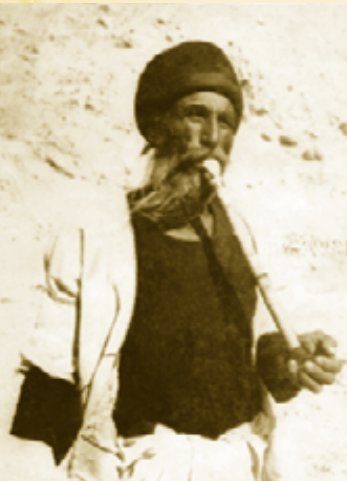
Koçek are knowledgeable men, often from the lay estate, with the gift of foresight. At the Qewlê Koçeka a Koçek who is present is said to fall into ecstasy after two stanzas (Omarkhali 2023, p. 475; Kreyenbroek, p. 8). Koçek Sadiq is regarded as the last Koçek (Omarkhali 2023, p. 465). See Koçek.
Şêx, P’îr and knowledgeable Mirîd
Every Şêx and P’îr should know prayers and burial texts. In Armenia and Georgia religious knowledge lies almost entirely with the spiritual families; there a Şêx and a P’îr usually perform together at the grave (Omarkhali 2023, pp. 125, 144). In Iraq knowledgeable Mirîd have long been equally respected – this is no innovation (Omarkhali 2023, pp. 124–125). Hymns about the founder of a lineage remain alive above all in that lineage, for example the Qewlê Omer Xala in the P’îr lineage Omerxalî (Omarkhali 2023, p. 121). Laypeople traditionally perform no rituals (Omarkhali 2023, p. 125).
A point of dispute: are the Qewal the guardians?
| View | Source |
|---|---|
| The Qewal are "specialists of the word", guardians and interpreters of the sacred texts; but only a few were trained as preachers. | Kreyenbroek, p. 7 |
| The widespread view that the Qewal are the main bearers is not correct. The main role belongs to a group of specially trained men who need not be Qewal: P’îr, Şêx and educated Mirîd, for example the Feqîr of Şengal or Koçek. The Qewal are trained above all in performance and sacred music, few in interpretation. | Omarkhali 2023, pp. 121, 137, 490; Omarkhali 2011/12, p. 146 |
| The Qewal perform religious texts, prayers and Qewl and are present at all festivals in Lalîş, at burials and days of mourning. | Lalişa Nûranî, p. 206 |
Both views can be combined: the Qewal are the public voice of the hymns, while deep interpretation lies with a few experts of various origins.
Four levels of experts
Omarkhali (2023, p. 125) distinguishes: (1) professionals such as Qewal, Qewlbêj and the Feqîr of Şengal; (2) knowledgeable performers at great occasions; (3) people who know some texts and perform the main rituals; (4) the large group that knows some texts and the narratives.
What makes a good expert
A good Qewlbêj is regarded as wise, knowledgeable, devout and modest. He is considered "chosen", endowed with a gift of the holy beings (xas, babçak, mêr). In the Caucasus it is said that the knowledge "reached him on the pillow" – in his sleep (Omarkhali 2023, p. 125). No good expert calls himself an expert (p. 126). A Qewlbêj cannot come "from outside": he must have heard performances in an Ezidi environment from childhood (p. 124). After every performance he names his teacher (p. 131).
Rules for performance
- Performance is only by heart; before holy objects are opened, the audience stands in silence (Omarkhali 2023, pp. 145, 153).
- If the performer coughs, another expert who is present immediately continues; no stanza may be missing (Omarkhali 2023, pp. 154–155; Omarkhali 2011/12, p. 157).
- The more public the performance, the "firmer" the text; two experts together increase accuracy (Omarkhali 2023, p. 159).
- At the Mishabet the listeners are silent, no one may leave (Kreyenbroek, p. 47).
Women
Performance and interpretation of the Qewl are a matter for men (Omarkhali 2023, pp. 141, 490; Omarkhali 2011/12, p. 158). But women often know the daily prayers and rituals; ceremonies for women and children are performed almost exclusively by women. They perform Beyt at women's gatherings, also at mourning ceremonies with men, and tell the çîrok (Omarkhali 2023, pp. 63, 141). They do not speak the Terqîn publicly, although they know it (p. 92). In the recordings of the Celîl brothers in Armenia, women also performed, for example Seyrana Şêx Kelaş (pp. 141–143).
Well-known experts
- Feqîr Hecî, son of Feqîr Şemo (1923–2019), from Baedrê: the main source of many Iraqi editions; recorded by P’îr Xidir Silêman, his son Bedelê Feqîr Hecî, Xelîl Cindî Reşo and Omarkhali; in 2010 he became Micêwirê Lalişê (Omarkhali 2023, pp. 128, 240, 510). See Feqîr Hecî.
- In 2001 Kreyenbroek names four living scholars of this rank who were not Qewal: Feqîr Hecî, Feqîr Xidir Berekat Keso, P’îr Ebo Xetarî and Feqîr Cindo (Kreyenbroek, p. 7, n. 11). By his own account Feqîr Xidir Berekat Keso knew about 107 Qewl (Omarkhali 2023, p. 124, n. 7).
- Qewal Silêman (Silêman Sefo) from Başîqe, head of all the Qewal (Omarkhali 2023, p. 514).
- Şêx Osman, son of Şêx Berahîm, formerly a servant in the house of Şêx Adî in Lalîş and pupil of the last Koçek; many recordings by Xelîl Cindî Reşo in 1999 in Detmold (Omarkhali 2023, p. 465; Kreyenbroek, p. XVII).
- Merwanê Xelîl (b. 1981), Qewlbêj, Omarkhali's main informant (Omarkhali 2023, pp. 510–511).
A shrinking circle
The true experts are a small, shrinking minority (Omarkhali 2023, p. 490). Informants complain that there are no longer experts of the rank of the old ones (pp. 131–132). Sons of Qewal often no longer want to take up the profession (Kreyenbroek, pp. XIV, 7). The expulsion from Başîqe and Behzanê in 2014 threatens the institution of the Qewal and thus the Sema (Omarkhali 2023, pp. 141, 493–496). Conservative experts therefore say: the experts themselves are the "living holy book", each individual one of its "pages" (Omarkhali 2023, p. 254).
See also
Sources
- Khanna Omarkhali: The religious textual tradition of the Ezidis – from the oral to the written. Saint Petersburg 2023 (Russian translation of the English original, Wiesbaden 2017), p. pp. 121–147, 152–155, 159, 240, 247–250, 254, 490, 493–496, 510–514
- Khanna Omarkhali: Yezidi Religious Oral Poetic Literature: Status, Formal Characteristics, and Genre Analysis. With some examples of Yezidi religious texts. In: Scrinium VII–VIII.2 (2011–2012): Ars Christiana, Leiden: Brill, pp. 144–195, p. pp. 146, 157–158, 163
- Philip G. Kreyenbroek, Khalil Jindy Rashow: God and Sheikh Adi Are Perfect. Sacred Poems and Religious Narratives from the Yezidi Tradition. Wiesbaden: Harrassowitz 2005, p. pp. XIV, XVII, 6–8, 45, 47
- S. A. Grigoriev, L. V. Ivasko, D. V. Pirbari (P’îr Dîma): Lalişa Nûranî / Святой Лалыш / Holy Lalish. Yekaterinburg: Basko 2008, p. pp. 4–5, 12, 206
- Dimitri Pirbari (P’îr Dîma), A. Ščedrovickij: Тайна жемчужины (The secret of the pearl). Moscow/Tbilisi 2016, p. pp. 24, 47, 257 (PDF)
- Bedelê Feqîr Hecî (Bedilê Feqîr Heci): Bawerî û Mîtologiya Êzidiyan. Çendeha Têkist û Vekolîn [Faith and mythology of the Ezidis. Some texts and studies]. Dihok 2002, p. pp. 7–8, 504, 506
- Һ'әсәне Шех К'әләше (Hesenê Şêx Kelaşê, Hesen Hesenyan): Р'е-р'ьзма мьләте Эзди ангори qьраре дин (Rê-rizma mileta Êzdî angorî qirarê dîn). Şamîran 1995 (scan and new text edition in the EZDIKI.COM library), p. p. 13
Found a mistake?
Is something wrong – a fact, a spelling, a source, an image? Let us know: we check every report and correct the article.
Other spellings: Qewlbej · Elmdar · Ulimbej · Dindar · Sencaqbegi · Sendschaqbegi · Senjaqbegi · Kenner der Techte · Kenner der Tekhte · Qawwal · Kawal · Kewal · Qawl · Qaul · Kewl · Faqir · Fakir · Sanjaq · Sandschak · Sancak